CHAPTER 2: MENTAL MODELS FOR SUSTAINABILITY

|

|
ACTIVITIES
- Focus of response: reactive vs. creative - from intimidation to effective communication p. 105
|

|

|
CASE EXAMPLES
- Focus of response: reactive vs. creative - from intimidation to effective communication p. 105 - Prevailing logic: either/ or vs. both - and - more effective power and real control p. 107
- Focus and response: reactive vs. creative p. 116 - Case study conclusion p. 116
|

|

|
TOOLS
- Focus of response: reactive vs. creative - from intimidation to effective communication p. 105
|
Supplemental Resources
Recommended Articles
- John Stuart Mill,Chapter III, Section 4. p 108
- Educating for a sustainability mindset : Organizations around the world have become increasingly concerned about managing for sustainability, yet undergraduate education about sustainability often presents the challenge of dealing with students equipped with a modest understanding of business and sustainability issues and whose awareness is sometimes politicized. Traditional-aged students are at a stage where they derive their own worldview on many subjects, including their place in a broader world. As such, equipping them to be useful professionals for the future, or even to specialize in sustainability- oriented careers, requires raising their awareness of the global situation in environmental, societal, political, and business terms. A curriculum must get them acquainted with what is needed for the world to reach a more fruitful future as well as with strategies the business sector can pursue to accomplish such an objective. More importantly, however, it should elicit a new worldview about sustainability and, even more profoundly, a deeply felt mindset embracing one’s purpose, feelings, and identity. This article thus proposes a means by which students can embody the ability and confidence to make an appreciable impact toward a sustainable planet.
 CLICK ON PICTURE TO VIEW VIDEO
Video Content
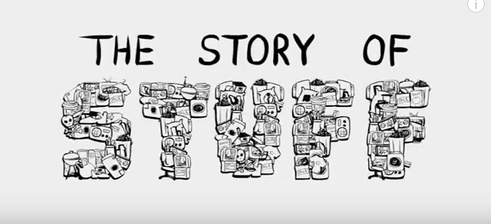
The story of stuff : From its extraction through sale, use and disposal, all the stuff in our lives affects communities at home and abroad, yet most of this is hidden from view. The Story of Stuff is a 20-minute, fast-paced, fact-filled look at the underside of our production and consumption patterns. The Story of Stuff exposes the connections between a huge number of environmental and social issues, and calls us together to create a more sustainable and just world. It'll teach you something, it'll make you laugh, and it just may change the way you look at all the stuff in your life forever
The story of stuff : From its extraction through sale, use and disposal, all the stuff in our lives affects communities at home and abroad, yet most of this is hidden from view. The Story of Stuff is a 20-minute, fast-paced, fact-filled look at the underside of our production and consumption patterns. The Story of Stuff exposes the connections between a huge number of environmental and social issues, and calls us together to create a more sustainable and just world. It'll teach you something, it'll make you laugh, and it just may change the way you look at all the stuff in your life forever